Dubai Real Estate Market 2026: Current Conditions in the UAE, Emirates, and Dubai
The Dubai real estate market 2026 is entering the year from a position of strength. The broader UAE economy remains expansionary, inflation is still relatively contained by global standards, tourism has stayed near record highs, and Dubai continues to attract new residents, investors, entrepreneurs, and companies. At the same time, the market is no longer moving in one straight line. It is becoming more segmented by area, product type, and price band. That is what makes the current moment important.
Across the UAE, the Central Bank said real GDP growth was estimated at 5.6% in 2025 and projected to remain broadly at the same level in 2026. UAE inflation averaged 1.3% in 2025, which is low enough to support consumer confidence and credit conditions relative to many global markets. In Dubai itself, housing inflation stayed much hotter than the headline average. Dubai’s 2025 CPI data shows housing, water, electricity, gas, and other fuels carrying a 40.68% weight in the basket, with year-on-year inflation in that category reaching 7.36% in December 2025. That matters because it shows where cost pressure is building most clearly: accommodation.
Population and activity levels also explain why real estate demand has held up. Dubai’s population was estimated at 4,248,200 at the end of 2024, while the number of active individuals in the emirate during daytime peak hours reached 5,937,800. The city is not only growing in resident count; it also carries a much larger daytime economic load because of commuting workers, temporary residents, and visitors. That supports demand for homes, offices, retail, logistics, and hospitality assets all at once.
Tourism is reinforcing the same pattern. Dubai welcomed 19.59 million international overnight visitors in 2025, up 5% year on year, and closed the year with more than 2 million visitors in December alone. Tourism is not just a hotel story. It supports retail spending, short-stay demand, branded residences, and investor confidence in Dubai’s global positioning.
There is one more layer to the current situation. In late March 2026, Dubai approved AED 1 billion in economic incentives to ease pressure on businesses and individuals over a three-to-six-month period starting 1 April 2026. That package does not signal weakness. It signals fast policy response and institutional flexibility during a period of regional uncertainty. For property investors, that matters because Dubai’s market tends to price not only growth, but also governance quality and speed of execution.
What current conditions in the Emirates and Dubai mean for property
The macro backdrop across the Emirates remains supportive for real estate. The UAE economy is still being driven by non-hydrocarbon sectors such as finance, insurance, manufacturing, and construction. In Dubai’s own GDP data for Q2 2025, construction grew 14.9% year on year, while wholesale and retail trade grew 4.3%. Construction growth shows developer confidence and pipeline expansion. Trade growth shows that the city’s commercial engine is still active.
That combination creates a specific market setup. Demand is still strong, but supply is also responding. That means the market in 2026 is not best described as “hot” or “cool.” It is better described as strong, liquid, but increasingly selective.
For end users, current conditions mean more choice than in the early post-pandemic rally, but not necessarily lower prices in prime or supply-constrained areas. For investors, it means returns now depend more on stock selection, handover timing, payment-plan quality, tenant depth, and exit strategy. For landlords, it means rental growth is still positive, though not equally across every asset class. For buyers using finance, the low-inflation UAE backdrop remains constructive, but affordability needs closer attention because housing costs have risen faster than the headline economy.
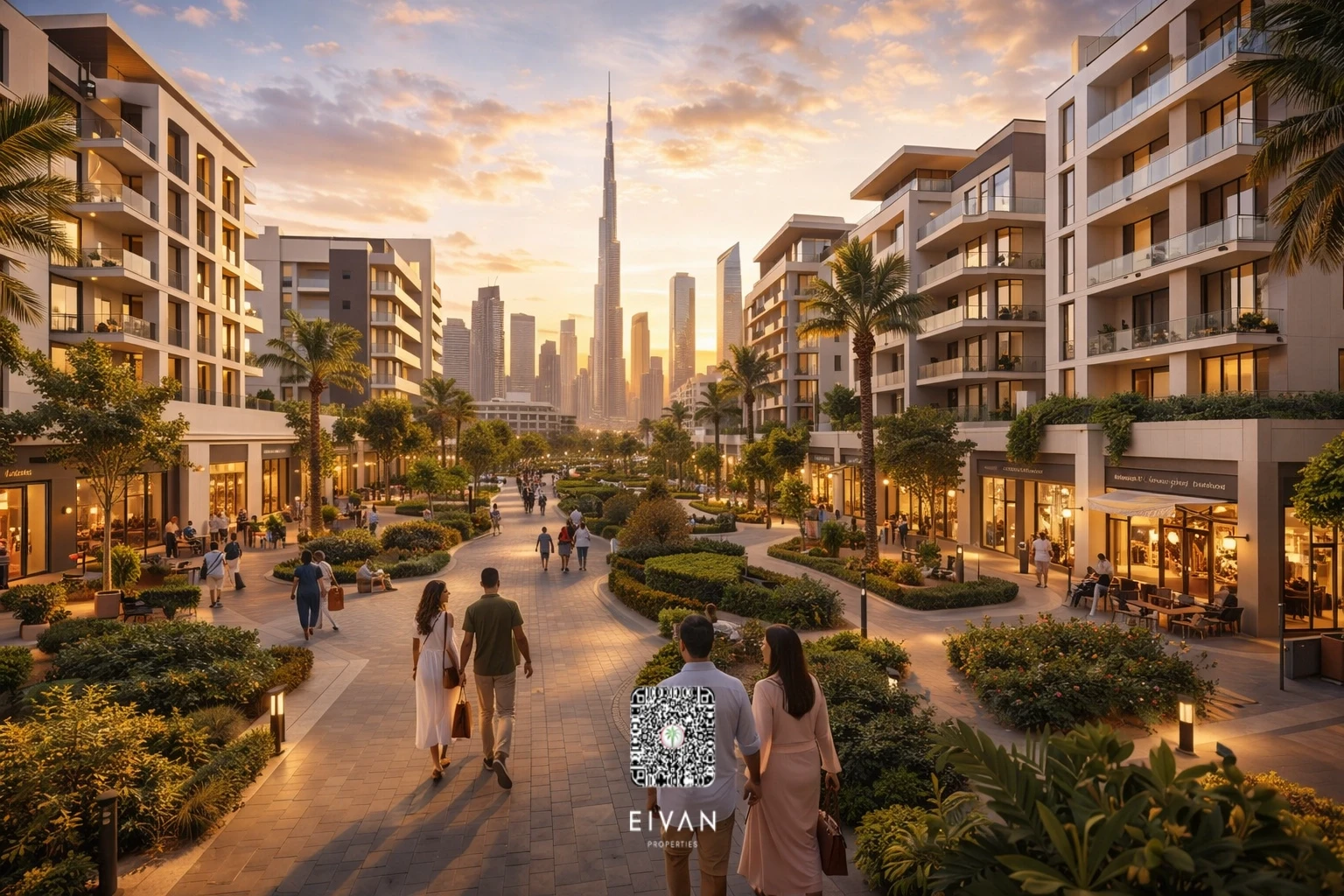
Dubai real estate market 2026: where the market stands now
The strongest official headline is this: Dubai’s real estate sector recorded more than 270,000 transactions worth AED 917 billion in 2025, up 20% year on year. Total real estate activity across sales, leases, and services reached 3.11 million transactions, up 7%. Real estate investments exceeded AED 680 billion across 258,600 deals, while the investor base expanded to about 193,100 investors, including 129,600 new investors. These are not small numbers. They show scale, liquidity, and broad participation.
The rental market also stayed very active. Dubai Land Department said registered tenancy contracts increased 6% in volume and 17% in value in 2025, reaching 1.38 million contracts worth AED 126.4 billion. New tenancy contracts rose to more than 513,000, while renewed contracts increased to more than 514,000. That mix is important. New contracts show fresh demand. Renewals show retention and stability. DLD also reported the number of sold units rose 25% to 147,500 units, with total value up 30% to AED 280 billion.
Private sector market research shows the same direction, but with more nuance. CBRE reported that by the end of 2025, Dubai residential rents were still up about 6% year on year, while sales prices rose about 13%. It also said off-plan sales accounted for nearly three-quarters of all residential activity, showing how strongly buyers are still backing future supply rather than only ready stock. At the same time, CBRE noted that performance varied across communities and that some emerging locations outperformed more mature districts. That is a key signal for 2026: the market is broad, but no longer uniform.
Dubai Real Estate Market Performance
2025 total transactions: 270,000+
2025 transaction value: AED 917 billion
2025 investments: AED 680+ billion
2025 investors: 193,100
New investors: 129,600
Dubai real estate market 2026 by prices, rents, and transaction flow
Early 2026 data suggests the market is still active, but moving at a more sustainable pace after a very strong January. Hamptons reported that February 2026 recorded AED 61.4 billion across 17,120 transactions. That was down month on month, but still up 20.4% in value and 6.3% in volume compared with February 2025. Apartments were the standout segment, with 13,081 sales worth AED 27.2 billion. Off-plan continued to dominate, accounting for 64.1% of total transactions by volume and about 72.6% by value in February.
This is why the Dubai real estate market 2026 should not be read as a simple boom story. It is a maturing story. Monthly activity can cool after a spike without changing the annual trend. The bigger annual picture still shows high liquidity, strong investor appetite, and deep interest in off-plan launches. The market is slowing from extremes, not reversing.
Which segments are strongest in the current situation
Residential remains the anchor, but it is not the only growth story. Office space is one of the tightest parts of the market. CBRE said Dubai office rents rose 18% year on year and average occupancy reached nearly 95% by the end of 2025. Retail also remained landlord-friendly, with occupancy at 98% in Dubai and rents rising close to 6%. Industrial and logistics rents in Dubai increased 13% year on year due to limited high-quality supply.
That matters for residential investors too. When offices are tight, employment hubs get stronger. When retail is full, community spending power is visible. When logistics rents rise, industrial corridors and workforce housing demand also strengthen. Dubai is not being driven by one asset class. It is being supported by several at the same time.
Dubai Residential Trend Snapshot
Residential sales price growth: +13% YoY
Residential rental growth: +6% YoY
Office rents: +18% YoY
Office occupancy: ~95%
Retail occupancy: 98%
Industrial rents: +13% YoY
What could slow the market in 2026
The main risk is not a collapse in demand. It is supply timing and submarket imbalance. CBRE explicitly noted a very significant future pipeline. That means some communities may keep outperforming, while others flatten as new stock arrives. Prime locations with scarcity, strong schools, transport access, or waterfront positioning may continue to command premiums. More standard stock in highly competitive corridors may face slower rental growth or longer resale periods.
Affordability is another issue. Dubai’s housing inflation has been materially higher than the broader UAE inflation rate. That does not stop the market, but it can shift demand toward smaller unit sizes, new districts, and more flexible payment plans. In plain terms, 2026 may reward smart pricing more than headline optimism.
Regional uncertainty is also part of the backdrop. However, Dubai’s policy response has been quick, and the city still retains powerful structural demand drivers: business migration, tourism, investor diversity, and a pro-growth regulatory environment.

Where investors should focus in the Dubai real estate market 2026
Investors should think in three buckets.
First, ready assets in proven rental districts still make sense for buyers who want immediate income and clear leasing comps. These work best when the building quality is strong and service charges are controlled.
Second, off-plan projects from credible developers remain attractive where payment plans are rational and delivery risk is manageable. Off-plan is still winning market share, but the gap between strong and weak projects may widen in 2026. Due diligence matters more now than two years ago.
Third, emerging communities with infrastructure momentum can still outperform, but only when demand is tied to real end users, not just launch hype. Recent research shows places such as Dubai Silicon Oasis and Town Square have outperformed some mature districts in price growth, which tells investors that value migration is real.
For international buyers, Dubai’s scale, legal structure, tax appeal, and steady stream of new investors still make it one of the most investable real estate markets globally. For local and regional buyers, the decision in 2026 is more tactical: ready or off-plan, yield or appreciation, core location or growth corridor.
Final outlook
The Dubai real estate market 2026 remains fundamentally strong. The UAE economy is expanding, inflation is still manageable at the national level, Dubai’s population base is large and active, tourism is at record territory, and transaction volumes remain historically high. But this year is not just about momentum. It is about market selection.
The best way to read the current situation in the Emirates and Dubai is this: the cycle is still positive, but the market is becoming more disciplined. Strong assets should keep performing. Weak assets will find it harder to hide behind a rising tide. That is a healthy sign for a market that wants long-term depth, not just short-term noise.
If you are buying, selling, or repositioning property in Dubai, work with advisors who understand both the numbers and the street-level reality. Eivan Properties, with more than 25 years of experience in Dubai real estate, can help you compare communities, assess ROI, review off-plan versus ready options, and build a smarter entry or exit strategy. For tailored advice, connect with the team at eivanproperties.ae.